Department of Agriculture
Name of Block : Barasat-I
Name of Sub-division: Barasat
Number of G.P: 9
Number of Municipality : 1
Number of Mouza under G.P: 83
Geographical Area: (Total=13455.84 ha)
Under G.P : 10600.63 ha
Under Municipality : 2855.21 ha
Cultivated Land Area: (Total=6320 ha)
Under G.P : 6113 ha
Under Municipality : 207 ha

Dr. Madhumita Nandi (Ghosh)
Deputy Director of Agriculture(P)
Barasat-I Block, North 24 Parganas
-:G.P wise Geographical Area and Cultivated Land Area:-
| Sl. No. | Name of G.P | Geographical Area (ha) | Cultivated Land Area(ha) |
|---|---|---|---|
| 1 | Purba khilkapur | 478.76 | 339 |
| 2 | Paschim Khilkapur | 927.12 | 471 |
| 3 | Ichhapur Nilganj | 1363.72 | 613 |
| 4 | Kashimpur | 1281.87 | 660 |
| 5 | Chhotojagulia | 165.55 | 82 |
| 6 | Kotra | 1891.59 | 1240 |
| 7 | Duttapukur-I | 521.09 | 372 |
| 8 | Duttapukur-I I | 953.11 | 534 |
| 9 | Kadambagachhi | 1741.73 | 1197 |
| 10 | Barasat MC | 673.14 | 207 |
-:Agriculture Scheme & Details:-
Direct Benefits: Direct benefit under the scheme includes financial assistance for cultivation purposeupto a maximum of Rs. 10,000 /- per annum and a minimum of 4,000/- per annum receivable in two equal installments during Kharif and Rabi seasons every year Farmers with 1 acre or more of cultivable land are entitled for assistance of Rs.10,000/- per annum. Farmers with cultivable land holding of less than 1 acre will get assistance on pro-rata basis subject to a minimum assistance of Rs. 4,000/-.
Other Benefits: Farmers registered in “Krishak Bandhu” scheme get preference in the State Government’s paddy procurement scheme implemented by the Food & Supplies Department. The State Government is planning to extend benefits of other farmer-centric government schemes to the Krishak Bandhu registered farmers.
Block level data in respect of Krishak Bandhu scheme (AI)
| Name of the Block | Rabi 2018 | Kharif 2019 | Rabi 2019-20 | Kharif 2020 | Rabi 2020 | Kharif 2021 | Rabi 2021 | Kharif 2022 |
|---|---|---|---|---|---|---|---|---|
| Barasat-1 | 6878 | 7899 | 7899 | 8034 | 9596 | 14864 | 15468 | 18081 |
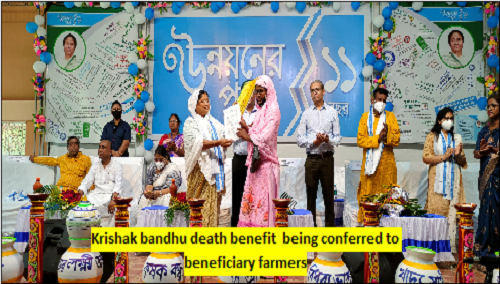
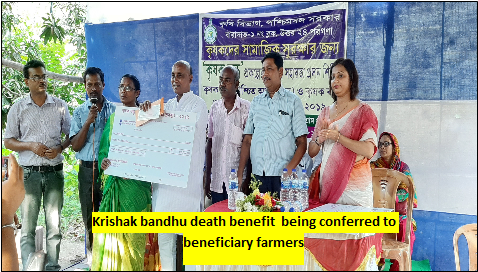
Under “Krishak Bandhu Death Benefit” component of the scheme, in case of death of a farmer between the age of 18 to 60 years, the State Government provides one time lump sum grant of Rs. 2 lakh to the family of the deceased to ensure social security to the bereaved family.
Krishak Bandhu Death Benefit report
| Sl.no. | Year | Number of beneficiaries |
|---|---|---|
| 1 | 2019-20 | 16 |
| 2 | 2020-21 | 22 |
| 3 | 2022-23 | 5 |
| Total | 43 |
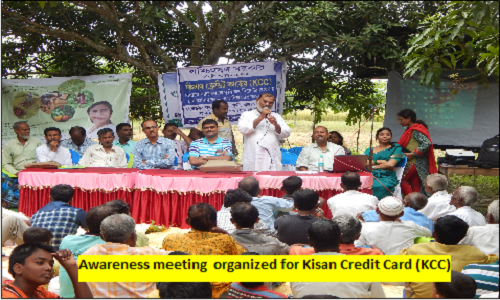
Farmers are exempt from the high interest rates of the regular loans offered by banks as the interest rate for KCC starts as low as 2% and averages at 4%. With the help of this scheme, farmers can repay their loans depending on the harvesting period of their crop for which the loan was given. Number of farming family covered under KCC 12645( about98.48%).
Documents required for KCC:
- Passport size photograph (1 copy)
- The KCC application form, duly filled and signed by the applicant.
- Identity proof and address proof specifying the applicant’s current address like Aadhaar Card, Voter’s ID Card, etc.
- Land ownership documents.
- Copy of Bank passbook.
- Age should be less than 60 yrs.

- Under the scheme an income support of 6,000/- per year in three equal instalments will be provided to all land holding farmer families.
- Definition of family for the scheme is husband, wife and minor children.
- State Government and UT administration will identify the farmer families which are eligible for support as per scheme guidelines.
- The fund will be directly transferred to the bank accounts of the beneficiaries.
- There are various Exclusion Categories for the scheme
Prime Minister Kisan Samman Nidhi Scheme (PM-KISAN) Report:
| Year | Number of beneficiaries |
|---|---|
| 2020-21 | 10107 |
| 2021-22 | 10228 |
The Government of West Bengal has been promoting the usage of farm equipment and machinery on priority basis since 2012-13 by incentivizing procurement of such equipment/ machinery by granting subsidy under the following three umbrella schemes launched between November 2012 and October 2014 with the approval of the Cabinet. A brief description of the schemes is given below.
1. Financial Support Scheme for Farm Mechanization (FSSM): It was launched on 5 December 2012 by the Agriculture Department, Government of West Bengal for extending financial support as subsidy to the small and marginal farmers of the State for purchase of farm equipment/ machinery. The aim is to facilitate mechanization in agriculture so as to ensure better productivity and minimize cost of cultivation. At present, subsidy up to Rs 200 lakh (Rupees two lakh) is sanctioned under the scheme subject to individual limits depending upon the type of equipment / machinery opted for procurement by the farmer.
2. One Time Assistance to Small and Marginal Farmers for Purchase of Small Farm Implements (OTA-SFI): It was launched on 12 February 2013 with the purpose to aid the farmers in procuring small implements necessary for agricultural operations One Time Assistance (OTA) up to Rs. 10,000/- (Rupees Ten thousand) is provided to the beneficiary farmer for purchase of small implements under the scheme. The OTA amount is limited to 50% of the cost of the implement
1. Credit Linked Subsidy Scheme for Rural Entrepreneurs to set up Custom Hiring Centres (CHC) of Farm Machinery: It was launched on 22nd October 2014 for promoting Custom Hiring Centres of farm machinery by rural entrepreneurs, with the aim of increasing farm power by encouraging usage of farm machinery by small and marginal farmers, who would otherwise be deprived of this aid because of the prohibitive cost of owning such assets, Subsidy @40% of the Project Cost subject to a maximum amount of Rs 80 lakh (Rupees Eighty lakh) is extended to applicant Rural Entrepreneurs/ PACS/ FPO/ FIG/ SHG/ SHG Cluster and Federation/ JLG/ Proprietorship Firms/ Partnership Firms/ Public Ltd. Company/ Private Ltd Company/ Corporation etc. for setting up CHC in the rural area.
| Name of Farm machinery | No of Machinery (2019-20) | No of Machinery (2020-21) | No of Machinery (2021-22) |
|---|---|---|---|
| Electric Pump set >1.5 - < 5.0 Hp | 0 | 14 | 4 |
| Engine Operated Power Sprayer above 16 Lit | 7 | 2 | 0 |
| Petrol / Diseal Pumpset 1.5 - 5.0 Hp | 9 | 23 | 4 |
| Power Tiller /Rotary Tiller | 14 | 9 | 4 |
| OTA-SFI | 39 | 25 | 7 |

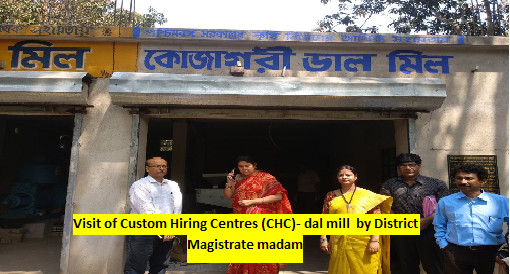
Custom Hiring centre details of Barasat-I Block: Oil Mill and Dal Mill are operational under CHC .
Address : Vill- Babpur, P.O.- Madhabpur, P.S.- Duttapukur, Pin- 700125, Barasat – I Block.
Total number of Members benefited from CHC– 25000 Nos.

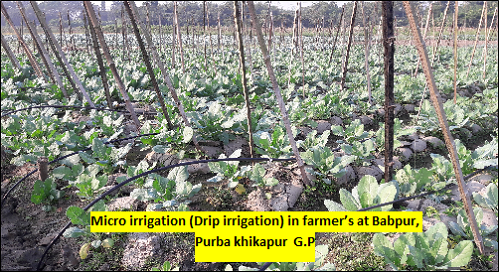
The BKSY was started in the Block in the year 2019-20. Now a day when increasing availability of irrigation water is becoming too costly, therefore now the time has come when full concentration is to be given on judicious use of available irrigation water by using sprinklers, drip and water carrying pipes.
Introduction of micro irrigation system – Micro irrigation has been introduced in Barasat –I Block under BKSY for judicious use of scarce water.
| Year | Components | Number of beneficiaries |
|---|---|---|
| 2019-20 | Sprinkler | 14 |
| 2020-21 | Sprinkler | 22 |
| 2020-21 | Drip | 4 |

RKVY scheme was initiated in 2007 as an umbrella scheme for ensuring holistic development of agriculture and allied sectors. The scheme has come a long way since its inception and has been implemented across two plan periods (11th and 12th). Under RKVY scheme, 30 Ha covered under Area expansion and production and sustenance of area of aromatic rice during 2021-22.
The National Development Council (NDC) in its 53rd meeting held on 29th May, 2007 adopted a resolution to launch a Food Security Mission comprising rice, wheat and pulses to increase the annual production of rice by 10 million tonnes, wheat by 8 million tonnes and pulses by 2 million tonnes by the end of the Eleventh Plan (2011-12). Accordingly, a Centrally Sponsored Scheme, ‘National Food Security Mission’ (NFSM), was launched in October 2007. The National Food Security Mission (NFSM) during the 12th Five Year Plan will have five components (i) NFSM- Rice; (ii) NFSM-Wheat; (iii) NFSM-Pulses, (iv) NFSM-Coarse cereals and (v) NFSM-Commercial Crops.
- Under NFSM- Pulse scheme, cropping system based cluster demonstrations on HYV paddy during kharif 2021-22 , 20 ha was organized . Under the scheme along with paddy seeds different input materials (carbendazim, bispyribac sodium, zinc sulphate heptahydrate, disodium octaborate ) were distributed among the farmer’s
- Under NFSM- commercial crop 5 Nos of FLD ( 50 Ha) were conducted and 100 Nos of nail weeders and 10 nos of Multi row seed drills were distributed to the farmers from Block Agriculture office.
Under State plan scheme, demonstrations were conducted on hybrid mustard (100 acre), hybrid maize (30 acre) during 2021-22.
Agricultural Technology Management Agency (ATMA) Scheme was launched during 2005-06. It aims at making extension system farmer driven and farmer accountable by way of new institutional arrangements for technology dissemination in the form of an Agricultural Technology Management Agency (ATMA) at district level to operationalize the extension reforms. ATMA has active participation of farmers/farmer-groups, NGOs,KrishiVigyanKendras (KVKs), Panchayati Raj Institutions and other stakeholders operating at district level and below. Release of funds under ATMA scheme is based on State Extension Work Plans (SEWPs) prepared by the State Governments. Allocation of resources for activities related to extension is linked to number of farm households and Blocks. At present, the Scheme is under implementation in 614 districts in 28 States and 3 UTs in the country.
Some innovative activities performed under ATMA :
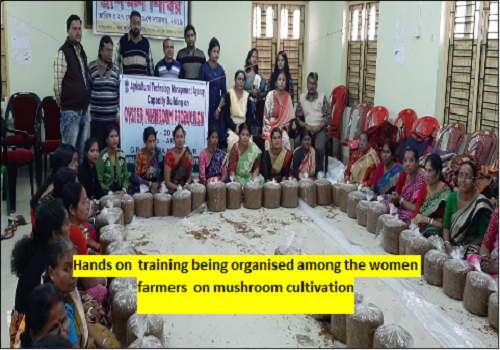
Introduction of Mushroom cultivation- Mushrooms can be grown in different seasons and growers( particularly women ) can have additional income throughout the year
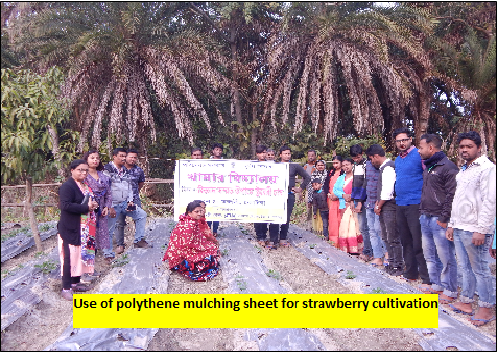
Introduction of strawberry cultivation – strawberry cultivation has been introduced in Babpur and Faldi of Barasat-I Block which has been proved as a profitable enterprise.
Adaption of dragon fruit cultivation – Dragon fruit widely known as red Pitaya has drawn much attention among the farmers due to its high economic value and ease of cultivation.
Adoption of Integrated farming system – With regular training and capacity building on modern technologies of Agriculture and allied sector(eg goatery, poultry, vermicompost, machinery) from ATMA, farmers were able to increase their earnings.
Adoption of Polythene mulching system- Use of saved irrigation water in the root zone, controls weed infestation and prevents soil erosion.
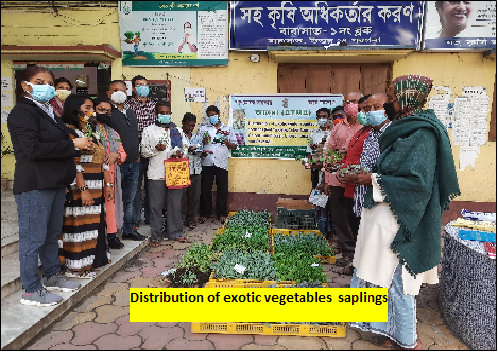
Popularization of Exotic vegetables- Exotic vegetables has been introduced for income generation among the farming community.
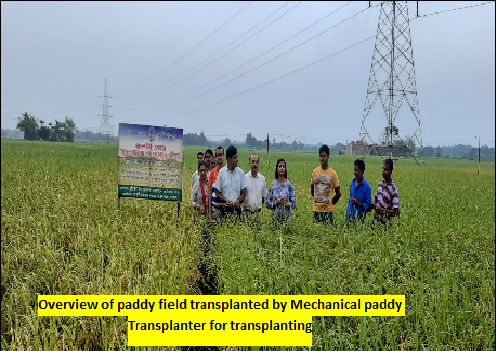
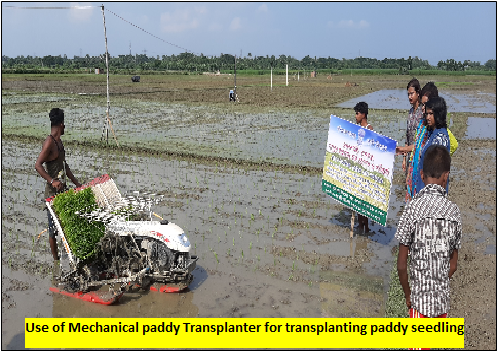
Introduction of mechanical paddy transplanter- RTP machine has been introduced to increase the financial status of farmers and reduce drudgery.
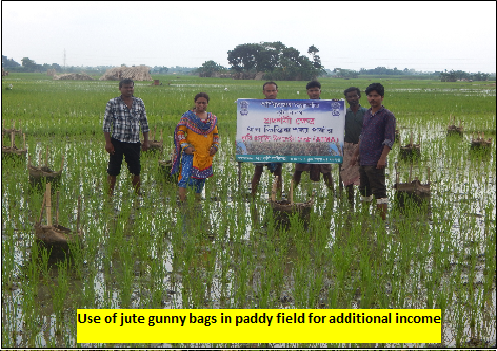
Column cultivation /Diversified farming leading to success- Has been introduced with the aims of utilising of excess water in paddy field, proper utilization of jute gunny bag, moreover an extra income 30 to 35 thousand per bigha. Crop diversification in waterlogged rice field may strengthen rice farmers’ livelihood, ensure good harvest and fetch higher return in early winter months.
Microbial retting in Jute – 8-10% more yield. Retting duration lessens by 6-7 days and better quality fibre (golden colour) can be got. Farmers have become interested to practice scientific retting using microbial culture.
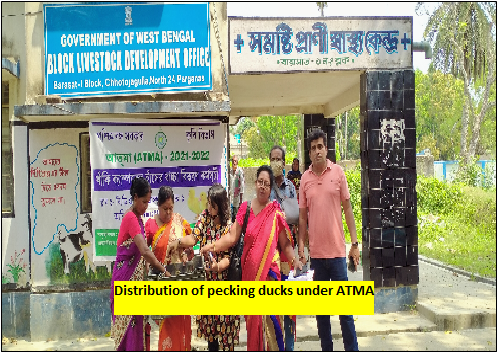
Popularization of Khaki Campbell ducks among the farming community- For Employment generation as well as income generation of the weaker section of community.